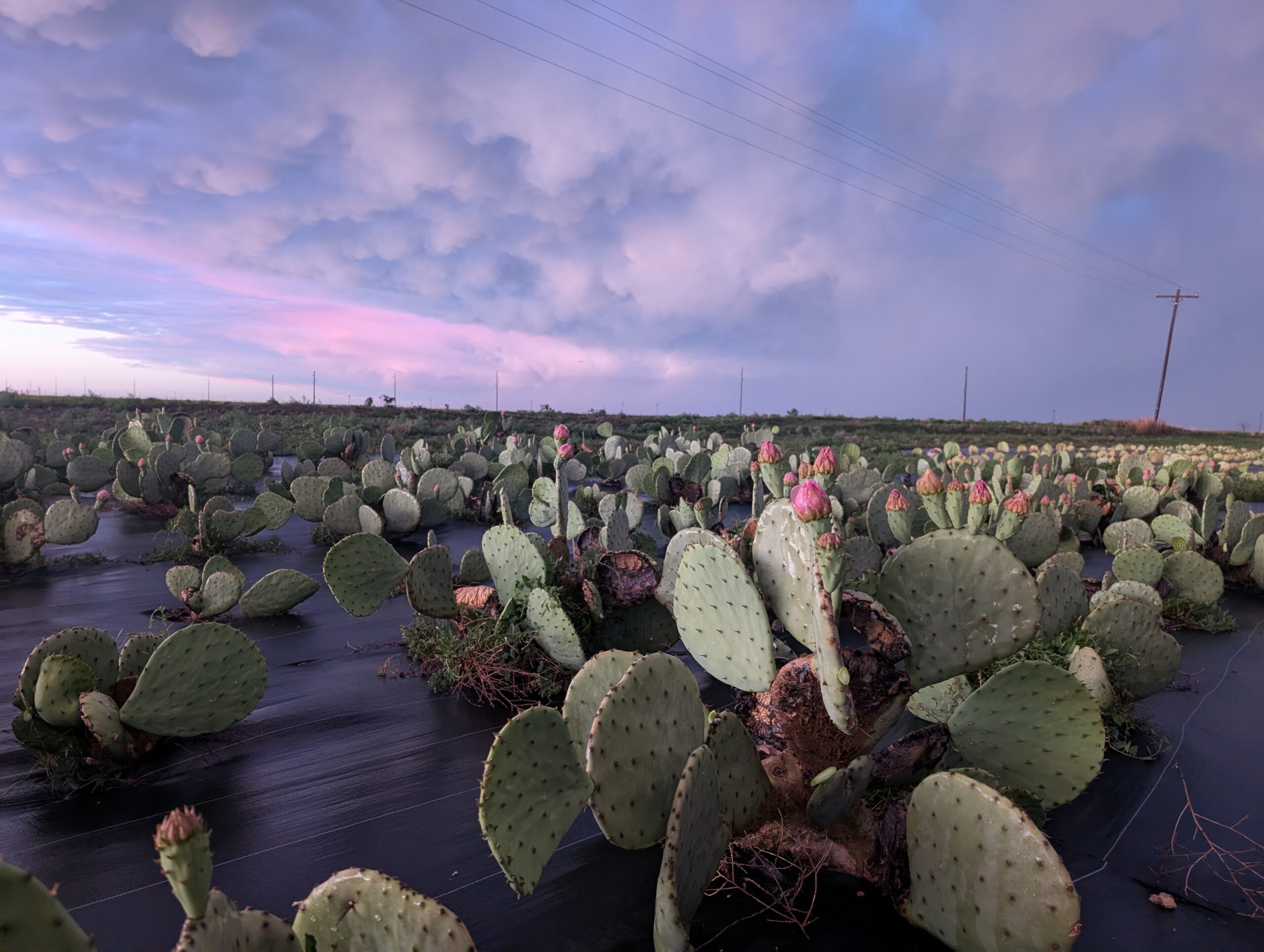
West Camp Nopal is located in Muleshoe, a small town in the Texas Panhandle.
West Camp Nopal
Founded in 2021 in Muleshoe, Texas, the farm started as a small-scale experiment.
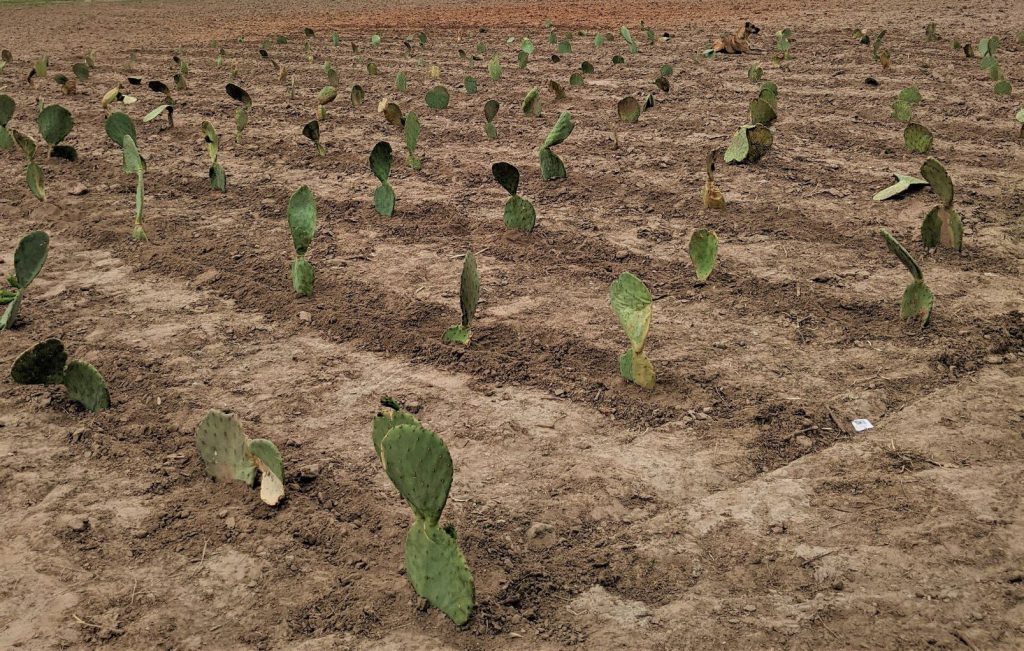
Prickly Pear Cactus can be found in all corners of the Lone Star State and the official state plant, but despite its commonality there were no commercial farms for this seemingly untouchable plant. More bewildering was that nopales (cactus) are a common food in the Mexican cuisine, and it made no sense there were no domestic commercial Prickly Pear Cactus farms.
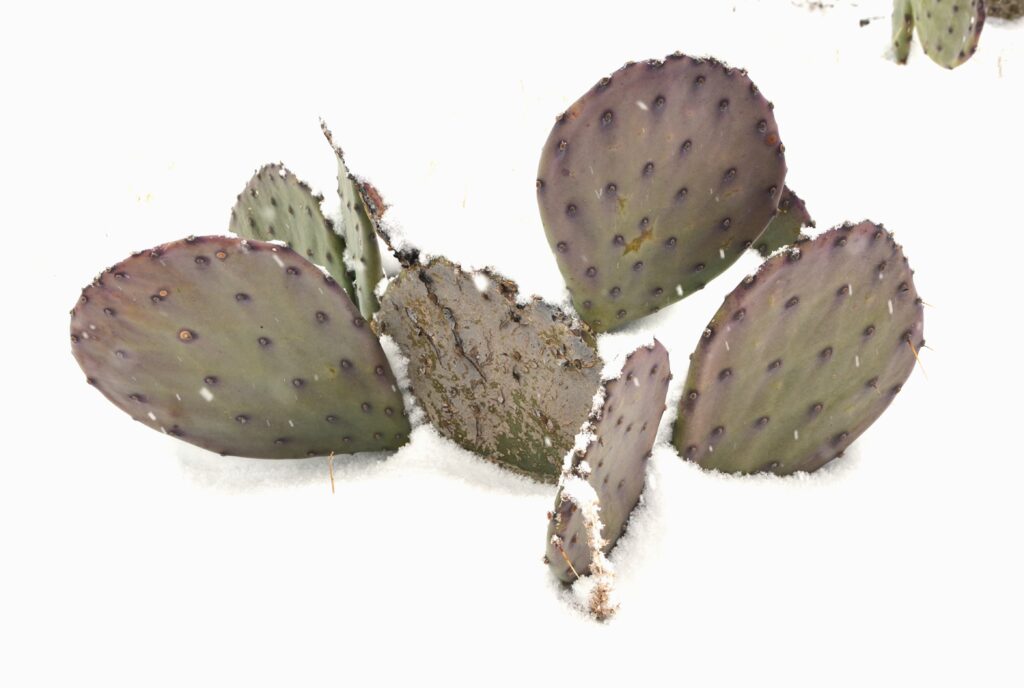
Muleshoe sits at the topmost part of Texas that few people visit but often visualize when thinking of the State. Imagine dry, red dirt sometimes sandy, tumbleweeds, windy and magnificent sunsets. However, it is less known that this same area gets snow, ice, arctic cold fronts, and blizzards. Muleshoe is in USDA Zone 7b (min temperatures 5°F to 10°F), not exactly the temperatures associated with a heat loving plant.
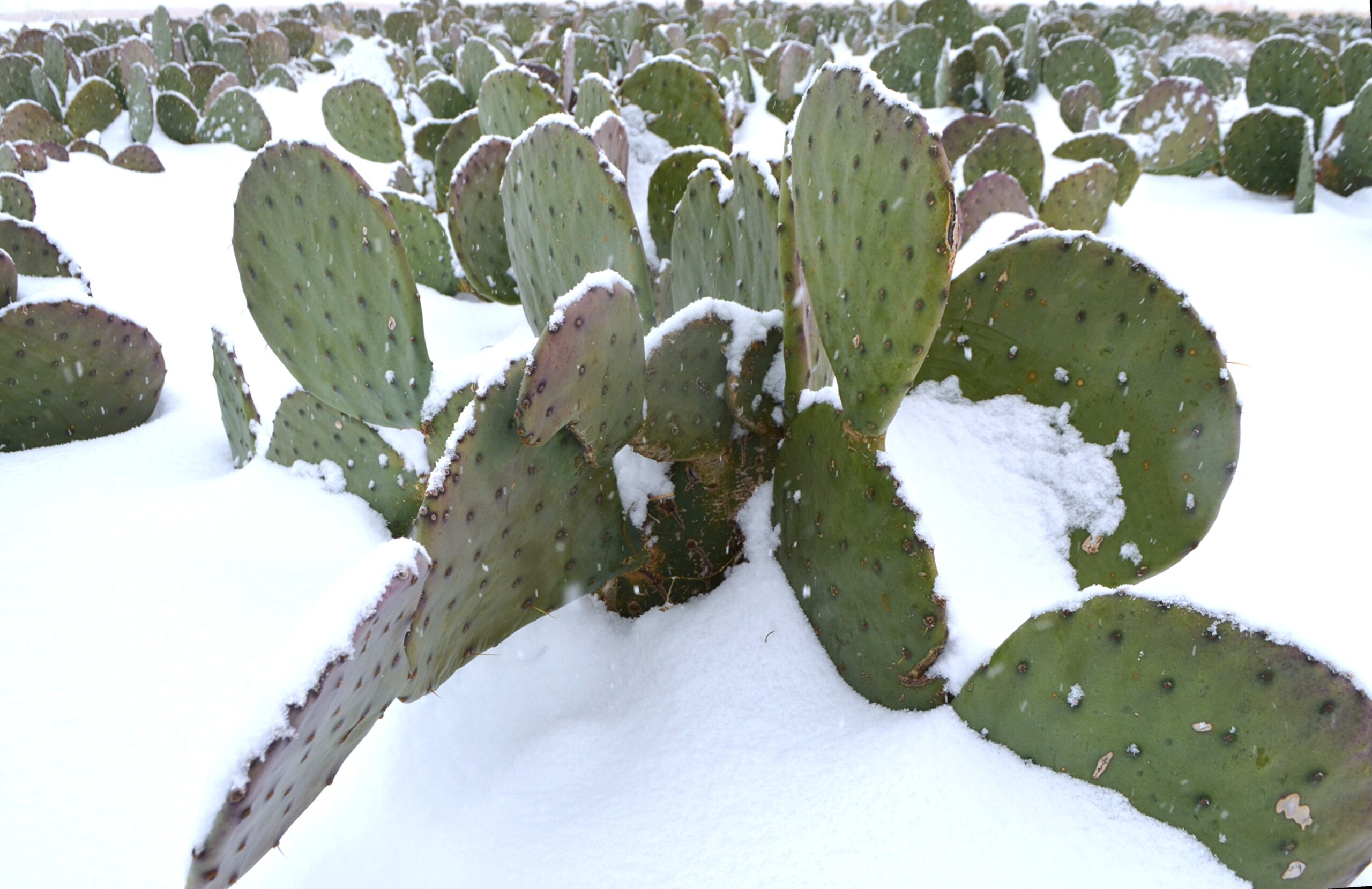
Currently, West Camp Nopal houses approximately 3,000 prickly pear cacti. With proper maintenance the nopales are anticipated to live and be productive for 30 – 50 years.
A Science Experiment
With limited resources and no prior experience, there was a huge learning curve. Research of nopal plantations in other regions of the world are available, but none with a climate similar to Muleshoe. The arctic winters were the unknown factor for a successful Prickly Pear Cactus farm. Another unknown was success using only natural rainfall for irrigation. Although the cactus can survive drought, it was unknown whether the plant could successfully establish its root system before the winters.
Procedures
Several techniques were tried and tested. We initially made several mistakes that will carry forward for the lifetime of the plant, but these mistakes were valuable in learning how to establish new plants correctly. We also learned of cactus pests and how to control these, as well as, how to mitigate the negative impacts of harsh weather conditions.
Results
Five years later, the farm is thriving and now full-scale operation. West Camp Nopal currently houses +3,000 plants ranging in age from a few months to 5 years old. Each plant has +15 mature pads, and each pad can produce +5 new pads a year and varies in prickly pear fruits. This equates to thousands of pads a year weighing thousands of pounds. The size of a new pad can reach up to 15” long within 2 months of growth and weigh over 1 lb.
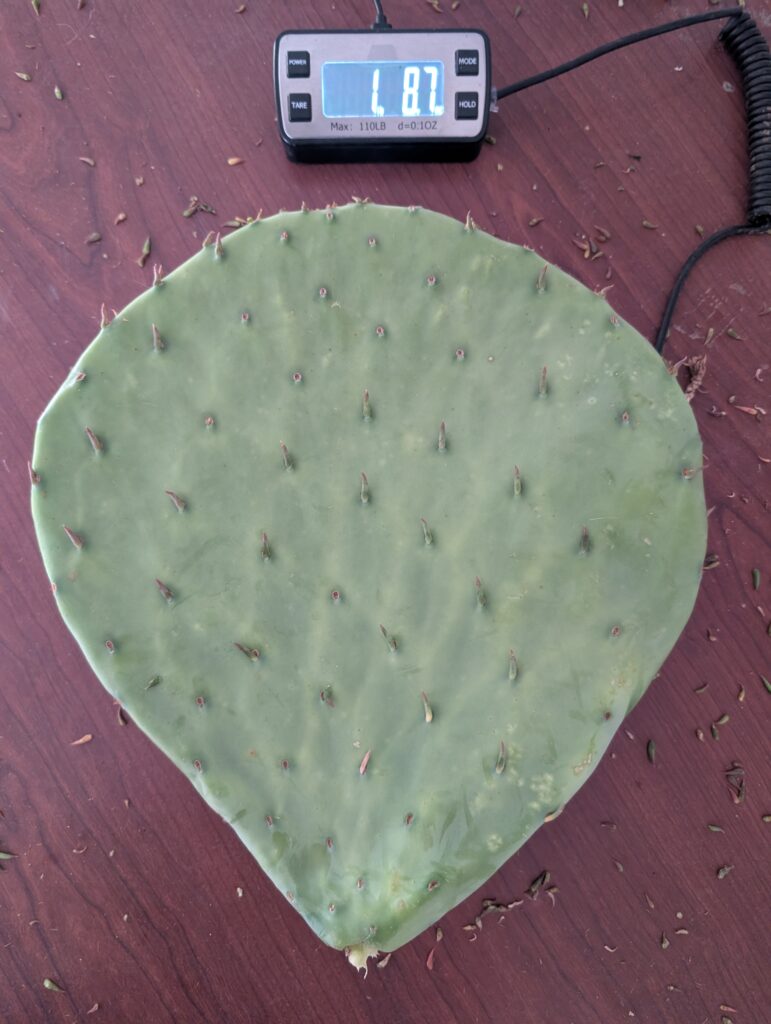
Older pads are can be larger and weigh upwards of +5 lbs. Bases of the older pads can be +2” wide and extraordinarily strong as a result of the windy season, which can have gusts over 60mph and averages over 27mph. High winds result in a stronger plant structure.
Future
West Camp Nopal was honored in April 2026 to be awarded a grant and mentorship with Texas Tech University to help launch cactus/nopal and prickly pear powders to support glucose management.

Research published in peer reviewed journals to support the glucose lowering effects of the prickly pear cacti because of its soluble fibers and other nutrients. This fiber is unlike any other fiber because it turns into a gel that slows digestion for the entire meal, not just carbohydrates. The prickly pear cactus also has compounds and enzymes that promote insulin sensitivity, enabling your body to more efficiently manage glucose.
West Camp Nopal is diligently working to accurately market these products and make them available to consumers. We will make an announcement via our website and social media accounts when they become available – so stay tuned!
West Camp Nopal is Unique
The wind factor is one of three factors that make West Camp Nopal’s prickly pear cactus unique. The second is the soil composition. Muleshoe has sandy soil unlike surrounding areas. This soil more effectively cools and drains water. The cactus thrives in this type of sandy soil allowing it to more efficiently grow.
The third and most important factor are the winters. When the cactus is under winter stress it rewires its internal chemistry and concentrates its nutrients, sugars and antioxidants34. This phenomenon is known as stress-induced metabolic accumulation.
REFERENCES
34. Jorge, A. O. S., Costa, A. S. G., Ferreira, D. M., & Oliveira, M. B. P. P. (2025). Seasonal Variation in Nutritional and Chemical Profiles of Wild Opuntia ficus-indica Fruits. Plants, 14(3), 409. https://doi.org/10.3390/plants14030409
